Computer vision for thermal imaging, powered by physics.
ThermoLabs is an R&D lab combining physics and AI to collect and analyze thermography data.
- Physics-aware AI
- Satellite | drone | handheld
- 200k+ papers indexed
- PhD in thermal remote sensing
- Level II certified thermographers
- Transport Canada complex RPAS licensed
Every platform. Its own pipeline.
Satellite, drone and handheld, each with its own physics.
-
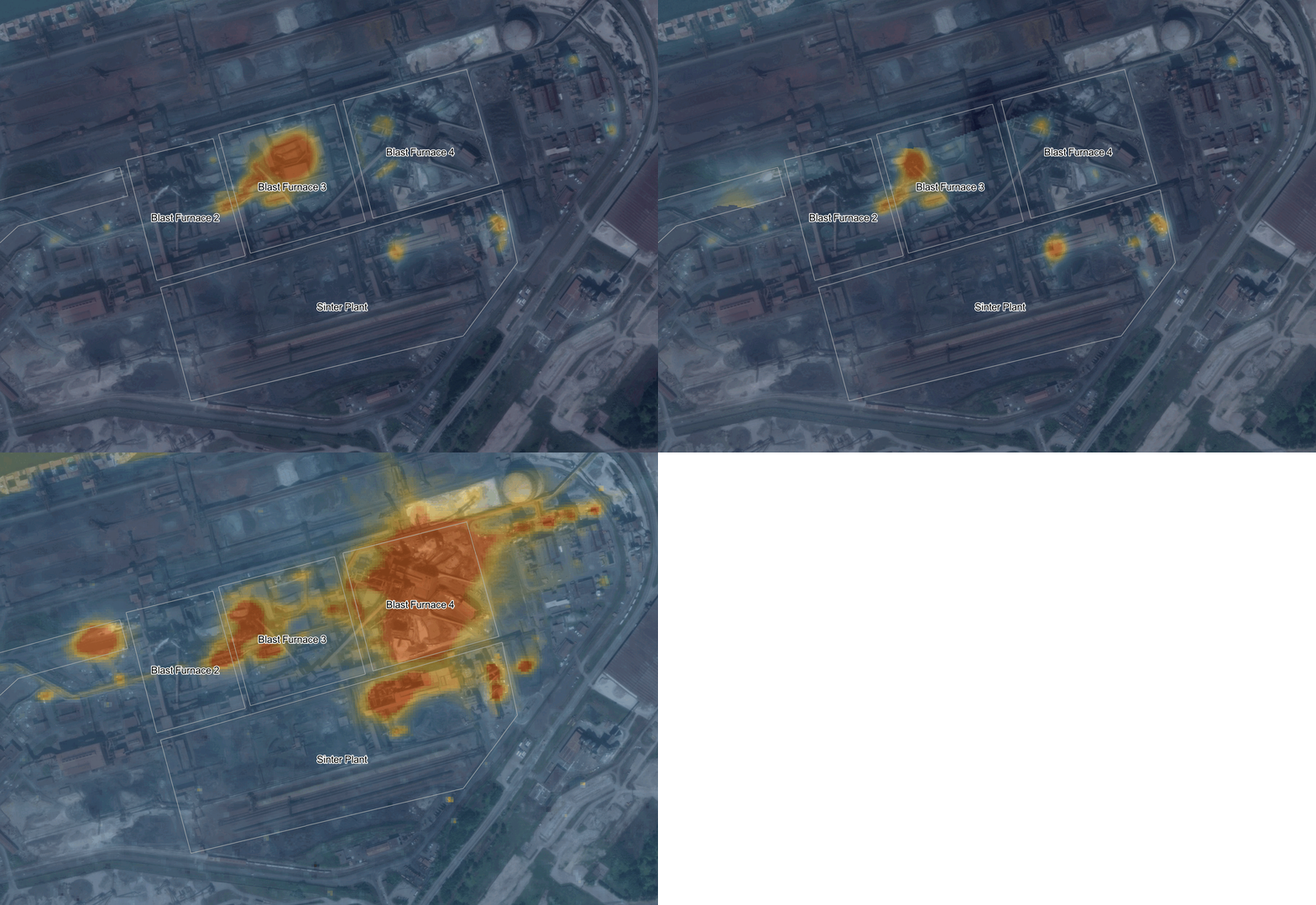
Satellite
City-scale heat, corrected for the atmosphere.
Neighbourhoods to whole cities -
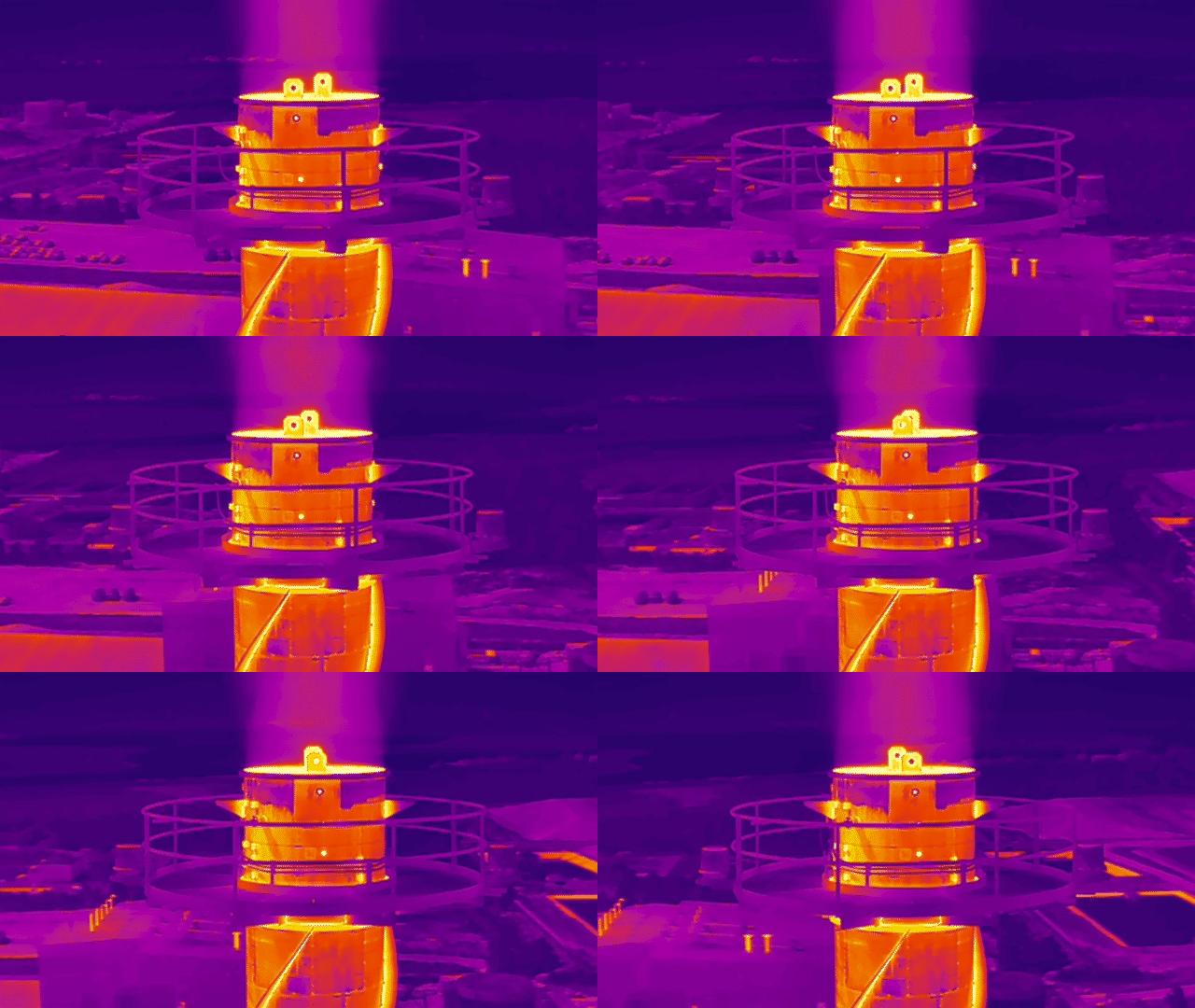
Drone
Building and site surveys, flown for thermal physics, not just coverage.
Single sites to districts -
Handheld
Close-up inspections, corrected for emissivity and reflections.
Components to rooms
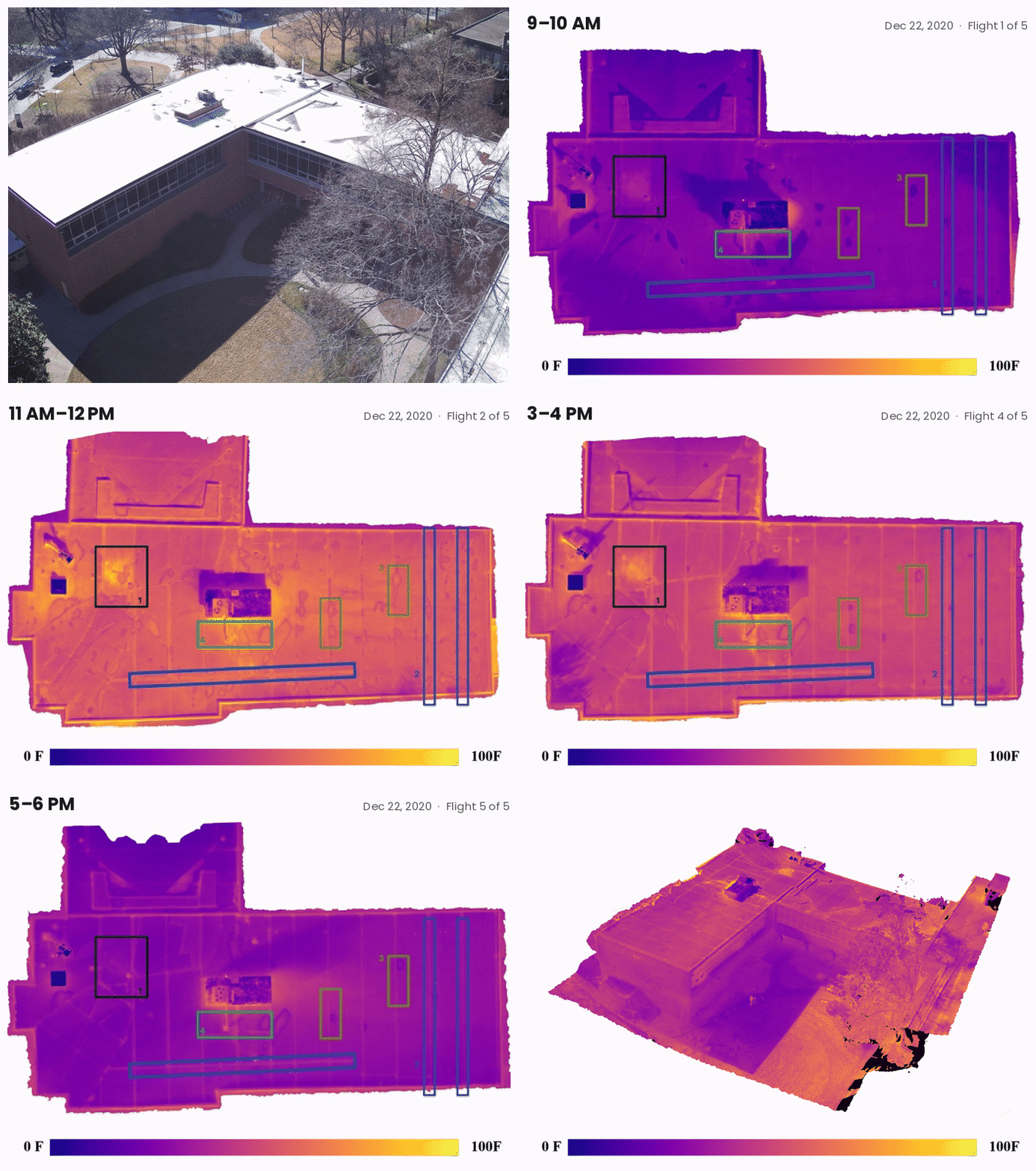
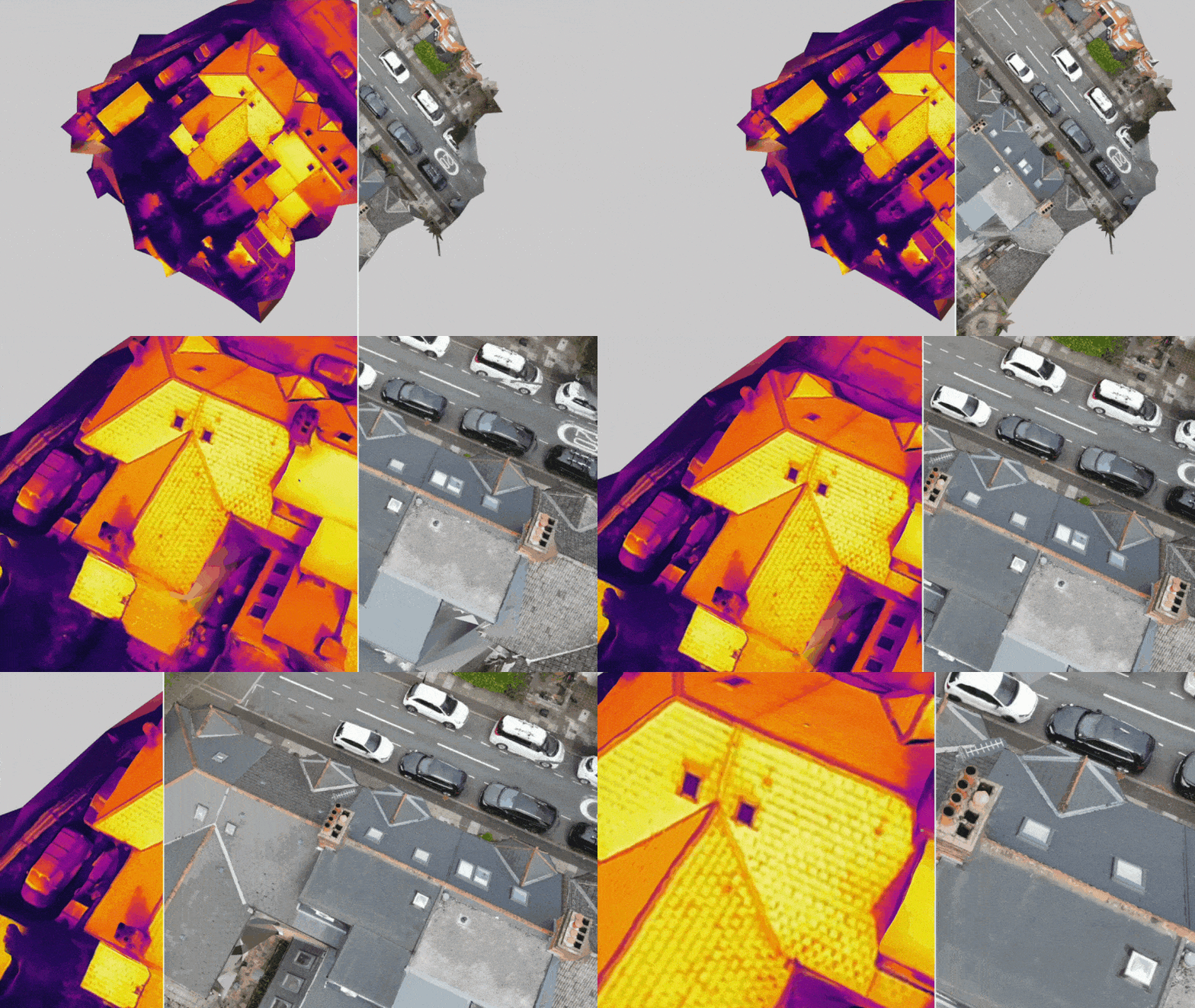
Drone time series of one roof, 9 AM to 6 PM.
One image is a snapshot. A series tells the story.
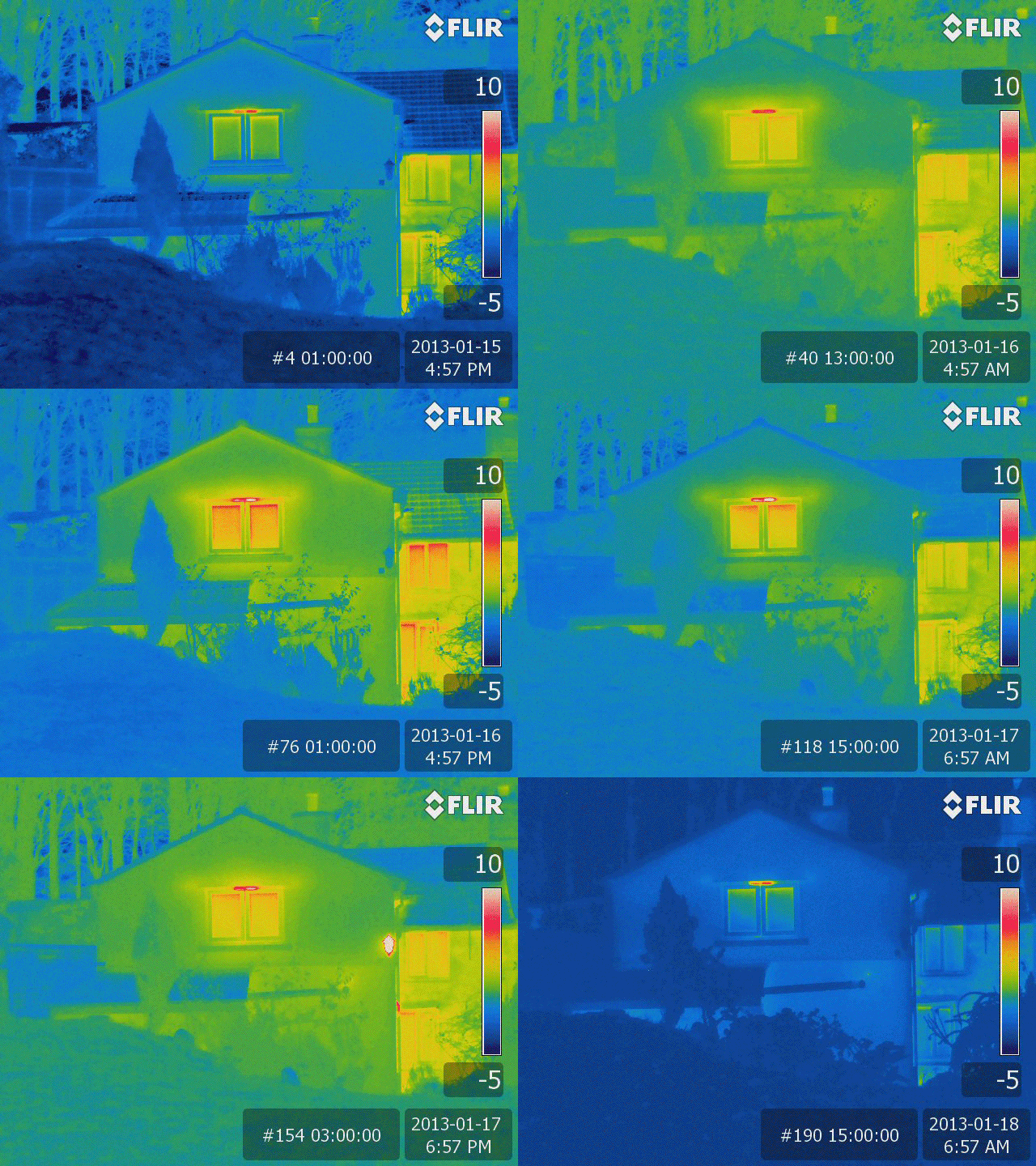
Handheld image of a house losing heat at night.
Watching how a building heats and cools over time reveals defects a single frame can miss. We capture, correct and analyze the whole sequence.
- Moisture
- Missing insulation
- Thermal bridges
Path planning for drone thermography
Today's flight planners were built for RGB and LiDAR. They treat a thermal camera like any other camera, where quality depends only on distance, resolution and overlap. Switch the plan to see what that misses.
The scene
- Coverage
- Resolution
- Overlap
The surface and its environment
- Viewing angle
- Sky and nearby reflections
- Time of day
- Wind, humidity, clouds
The sensor
- Speed limit before blur
- Low-texture alignment
3 of 9 factors considered
Covers the area. Can still miss the temperature. Every flight collects reliable thermal data, not just coverage.
Meet the team
-

Homayoun Rezaie
Founder • Technical Lead
PhD in thermal remote sensing, with 6 years of airborne, high-resolution mid-wave thermal imaging.
-

Amirhossein Zahedi
Co-founder • Business Lead
MBA with 10 years of business experience, leading sales, client projects and go-to-market.
-
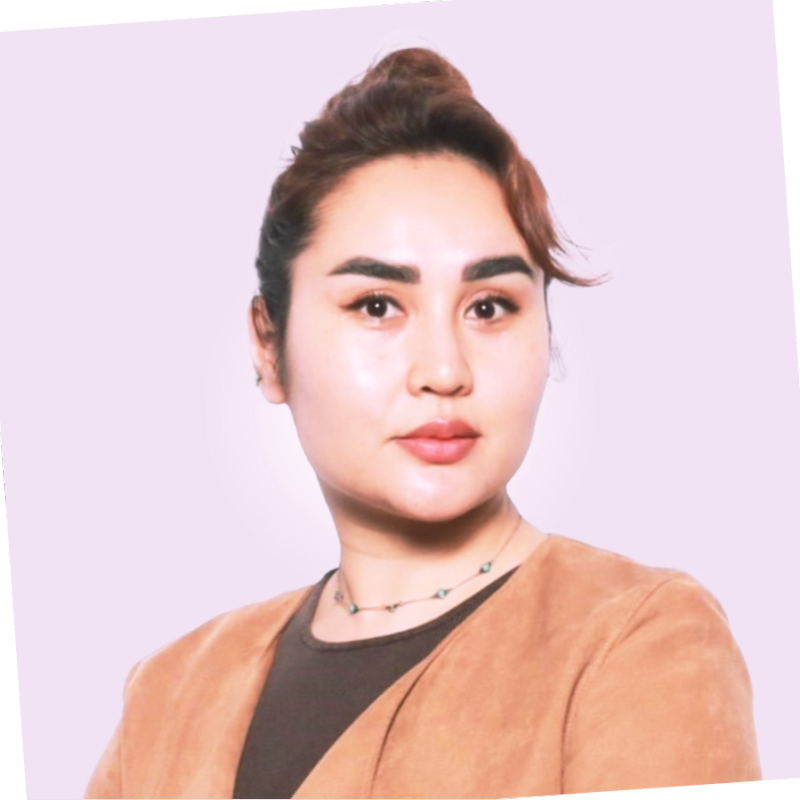
Zahra Rezaie
Drone Pilot
Master of GIS, flying our drone surveys and turning thermal data into maps and geospatial analysis.
The questions behind every thermal survey.
Good thermography starts long before the camera turns on. These are the decisions that shape every project we take on.
One building or a whole city?
Scale sets the platform: handheld or drone for a building, satellite for a city.
Qualitative or quantitative?
Qualitative finds the problem. Quantitative measures it, and that means accounting for emissivity, reflections, distance and the atmosphere.
One image or a time series?
An image is a snapshot. A series shows how a surface heats and cools, which is often what separates a real defect from a shadow or a reflection.
When is the best time to collect data?
It depends on the defect. Roof moisture shows best in the evening after a sunny day. Heat loss needs a cold night and a large indoor–outdoor temperature difference. Timing decides whether a defect is visible at all.
What's the best flight path for a drone?
One planned for thermal physics, not just geometry: viewing angles that avoid reflections, enough overlap for clean stitching, and the right time of night.
How does mosaicking change temperatures?
Each image sees the same spot from a slightly different angle and distance. Standard stitching blends them like regular photos, which averages the readings and quietly changes the temperatures. We stitch with the radiometry in mind.
What are the sources of error?
Emissivity, reflections, weather, distance and the sensor itself. Most errors start at capture, so that's where we control them.
How do you interpret the data?
Correct for the physics first, then read the patterns in context: the building, the weather and the history of the site.
-
1 / 8
One building or a whole city?
Scale sets the platform: handheld or drone for a building, satellite for a city.
-
2 / 8
Qualitative or quantitative?
Qualitative finds the problem. Quantitative measures it, and that means accounting for emissivity, reflections, distance and the atmosphere.
-
3 / 8
One image or a time series?
An image is a snapshot. A series shows how a surface heats and cools, which is often what separates a real defect from a shadow or a reflection.
-
4 / 8
When is the best time to collect data?
It depends on the defect. Roof moisture shows best in the evening after a sunny day. Heat loss needs a cold night and a large indoor–outdoor temperature difference. Timing decides whether a defect is visible at all.
-
5 / 8
What's the best flight path for a drone?
One planned for thermal physics, not just geometry: viewing angles that avoid reflections, enough overlap for clean stitching, and the right time of night.
-
6 / 8
How does mosaicking change temperatures?
Each image sees the same spot from a slightly different angle and distance. Standard stitching blends them like regular photos, which averages the readings and quietly changes the temperatures. We stitch with the radiometry in mind.
-
7 / 8
What are the sources of error?
Emissivity, reflections, weather, distance and the sensor itself. Most errors start at capture, so that's where we control them.
-
8 / 8
How do you interpret the data?
Correct for the physics first, then read the patterns in context: the building, the weather and the history of the site.